

MATSURI ─ JAPANESE CULTURE, HANDS-ON
Step inside Japan's culture —
and help keep it alive.
Festivals, traditional arts like tea ceremony and Zen, music nights after dark. Join in with locals and travellers from around the world — and what you pay goes back to the organisers, shops and makers who keep Japanese culture going. Matsuri is the app for that.
Scan with your iPhone camera to open the App Store
42.68M
Foreign visitors to Japan in 2025 — over 40 million for the first time[1]
¥9.5tn
Spent by foreign visitors in Japan in 2025 — a record[2]
~1/3
What Japan's traditional crafts produce now, compared with FY1998 (FY1998 → FY2020)[3]
More travellers, and more money spent, than ever.
Yet the people who carry Japan's culture keep getting fewer.
守WHY MATSURI
Spreading the word won't save a culture.
Telling the world about Japanese culture is a good thing. But being known isn't what keeps a culture alive. If the people who run the festivals and make the pottery can't make a living from it, the culture quietly disappears.
Festivals listed as cultural properties[4]
~60
Festivals designated as cultural properties by Japan's prefectures that were later suspended or discontinued (2016 survey). Even a festival officially recognised as worth protecting can't go on without people to carry it.
流WHERE THE MONEY GOES
Record numbers of visitors.
Yet the money doesn't stay.
Overtourism makes the news because people really are coming. So why does the culture keep losing the people who carry it? There are reasons.
People and money gather in the big cities
In 2024, 69.4% of foreign guests' overnight stays were in the three metropolitan areas of Tokyo, Osaka and Nagoya[5]. Festivals and workshops in the regions still see little of either.
Fees flow out of the country
So no one can take it over
When nothing is left over, the next generation can't afford to carry it on. More visitors just leave more crowds and more work behind — that's what is happening across Japan right now.
What stays local when a ¥10,000 experience is sold
Overseas experience-booking site (20–30% fee)
Stays local ¥7,000–8,000¥2,000–3,000
Matsuri (card payment, 5%)
Stays local ¥9,500¥500
A simple estimate based on commission rates alone. What a host actually receives depends on each company's terms and the payment method.
還HOW MATSURI WORKS
So we built Matsuri
to send the money back.
What people from around the world spend on joining in, buying and enjoying comes back to Japan as income for festival organisers, craftspeople and shops. Not just showing culture off — keeping it going.
- 知STEP 1DiscoverTravellers meet Japanese culture through media and social feeds.
- 体STEP 2Join inFind festivals, traditional arts and music nights in the app, and take part.
- 品STEP 3Take it homeBuy pieces of Japanese culture, from sumo to tea, and keep enjoying them after the trip.
- 還STEP 4It goes backFees and sales become income for the organisers, shops and makers in Japan.
A 5% fee
5% for card payments, 1% in crypto (SOL or MTC). The rest of every fee and sale belongs to the organisers, shops and makers.
Straight to the people who make it
Festival organisers, shrines and temples, workshops and shops put their own experiences and goods in front of the world. Matsuri connects the people who keep Japan's culture going with everyone else — directly.
From tourist to one of the crew
You're welcomed not as a spectator but as someone who helps carry the festival. Places that are short of hands gain new friends from around the world.
A day of Japanese culture0:56
Tea, sumo practice, hot pot, a festival — booking and shopping, all in one app.
映FILM
A day of Japanese culture, in one minute.
Tea, sumo practice, hot pot, a festival — booking and shopping, all from one app. Here it is as a one-minute film.
Footage for illustration only (includes AI-generated video).
端THE APP
One app to find it, join it and take it home.
The app works in 9 languages, including English, Japanese, Chinese and Korean. Locals and visitors join the same experiences from the same screens.
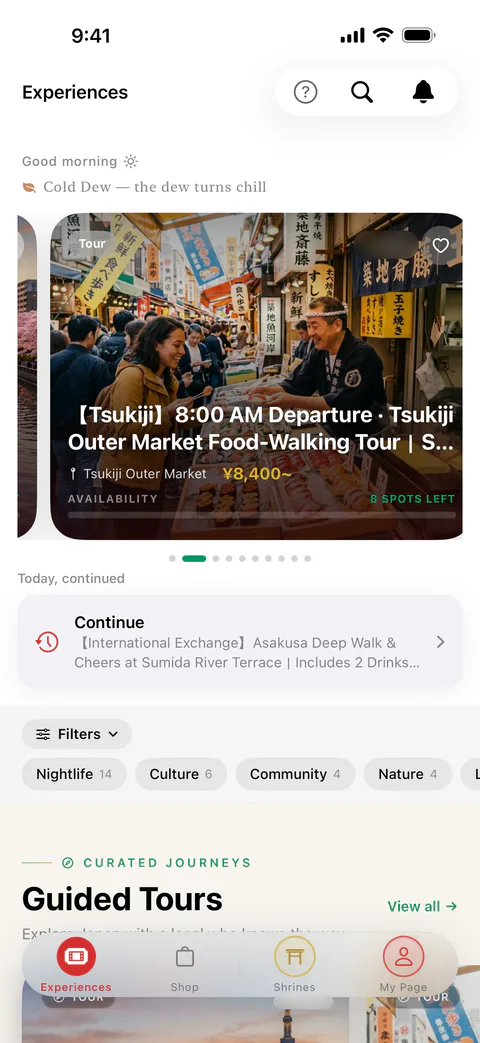
Find experiences
Guided tours, workshops, meetups and events — by category or date.
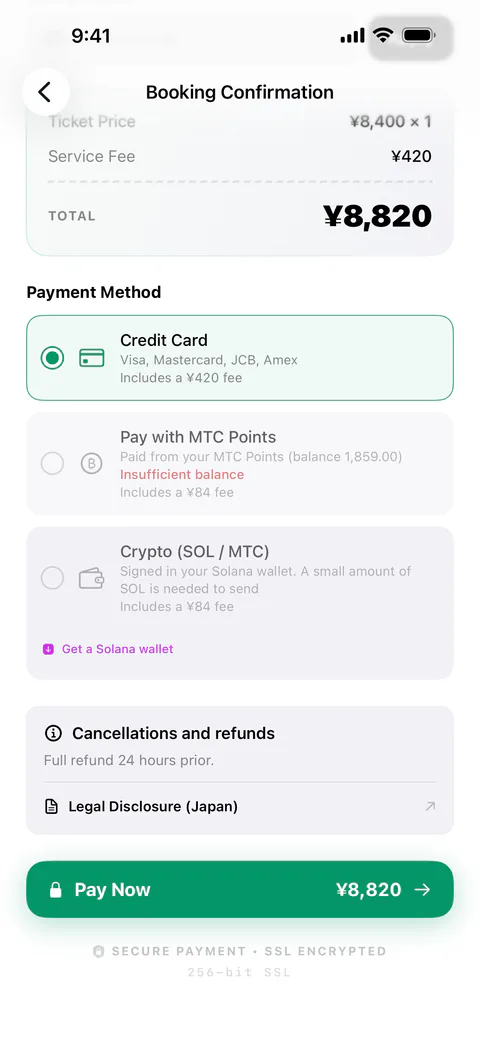
Book and pay
By card, MTC Points or crypto. Your ticket arrives in the app as a QR code.
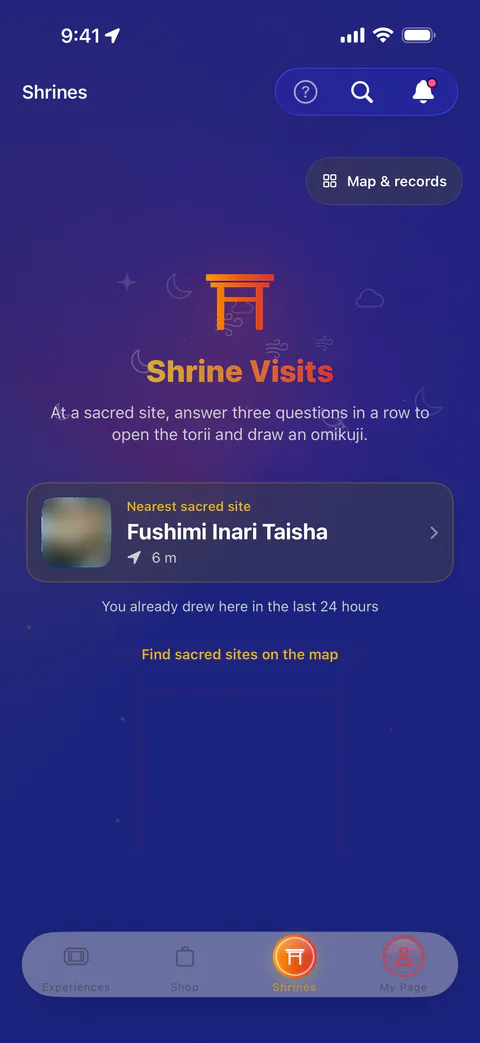
Omikuji walk
Answer three questions in a row at a spot and the torii opens, with a guide to the etiquette.
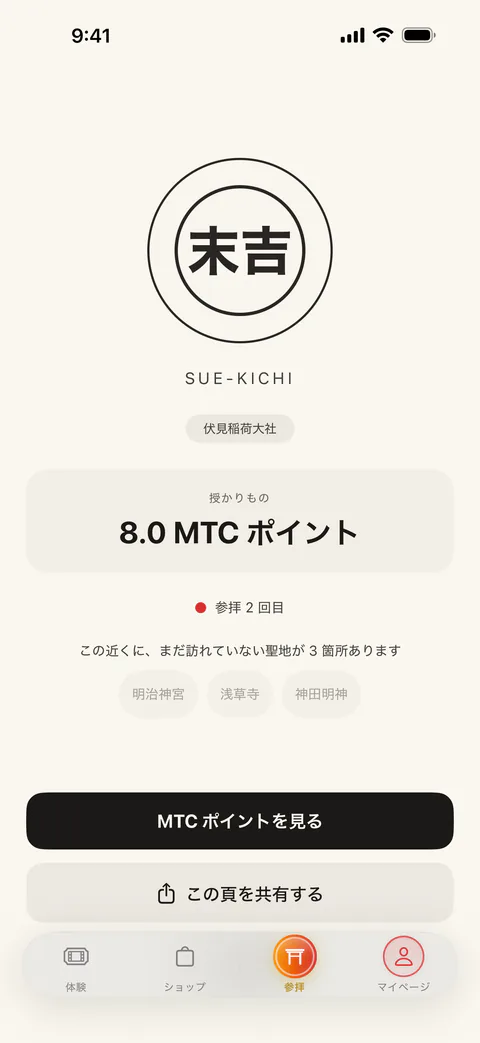
Omikuji
Draw one to receive MTC Points. Up to three times every 24 hours.
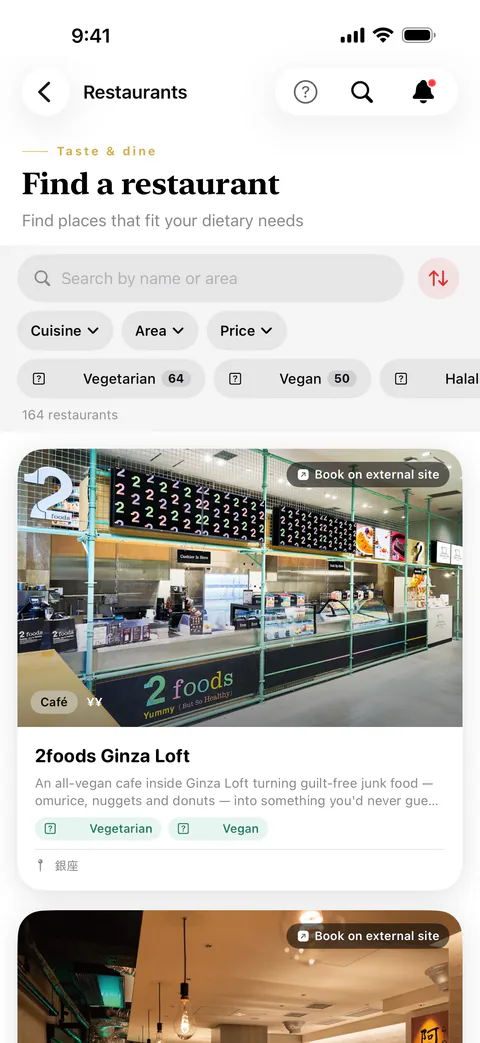
Restaurants
Search by diet — vegetarian, halal and more.
Screens from the iOS app in October 2026, in English (the omikuji result is shown in Japanese). Experiences, products and prices are as on the day they were captured.
和EXPERIENCES
Japanese culture — not just to watch, but to do together.
From festivals and traditional arts like tea and Zen to music nights. No complicated preparation: pick an experience and step into the circle.
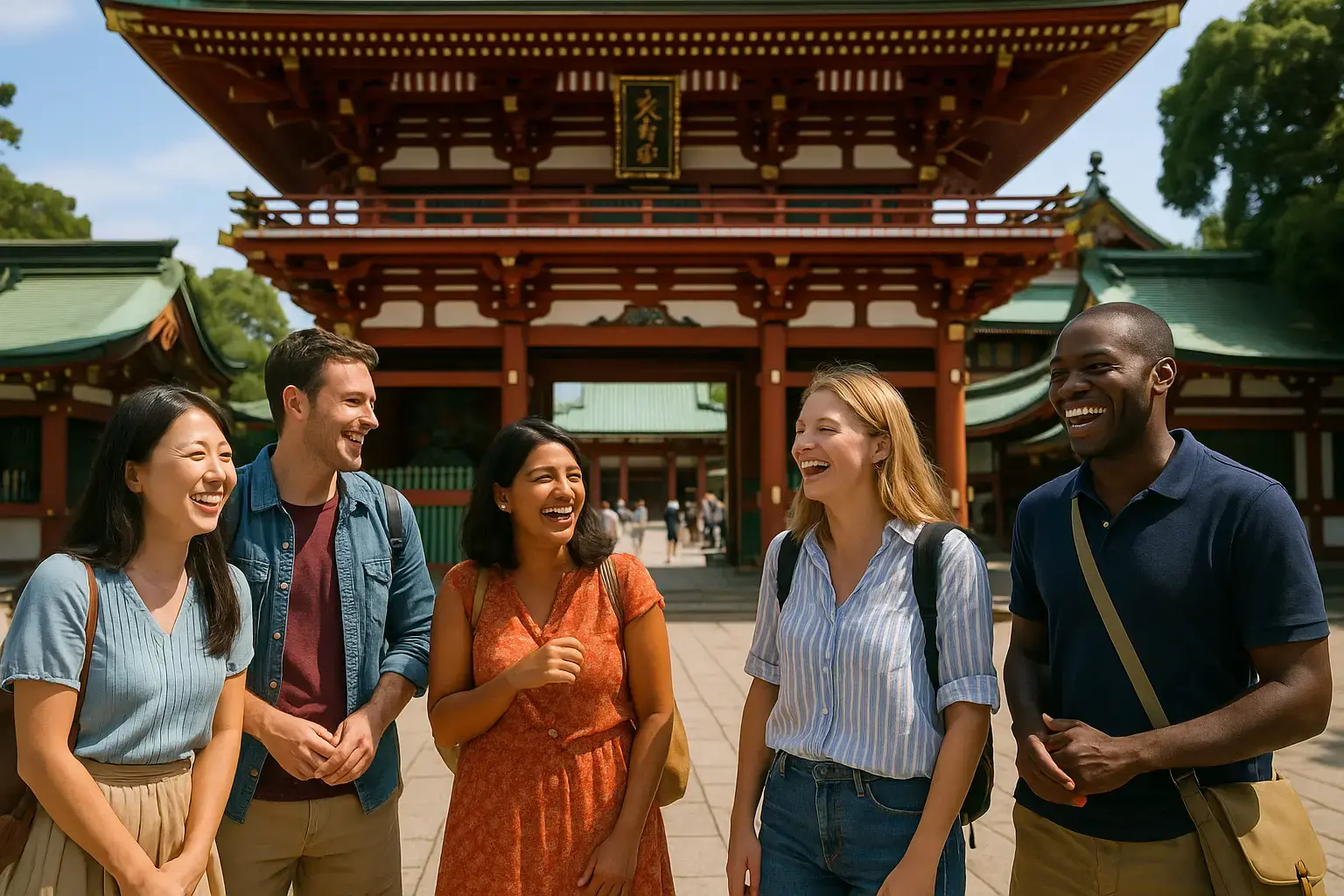
縁POINT 01
Join in alongside the people who live here
Stand shoulder to shoulder with locals and with travellers from everywhere, inside the same experience. You don't watch Japanese culture from a distance — you do it with the person next to you. That's when Japan stops being a backdrop.
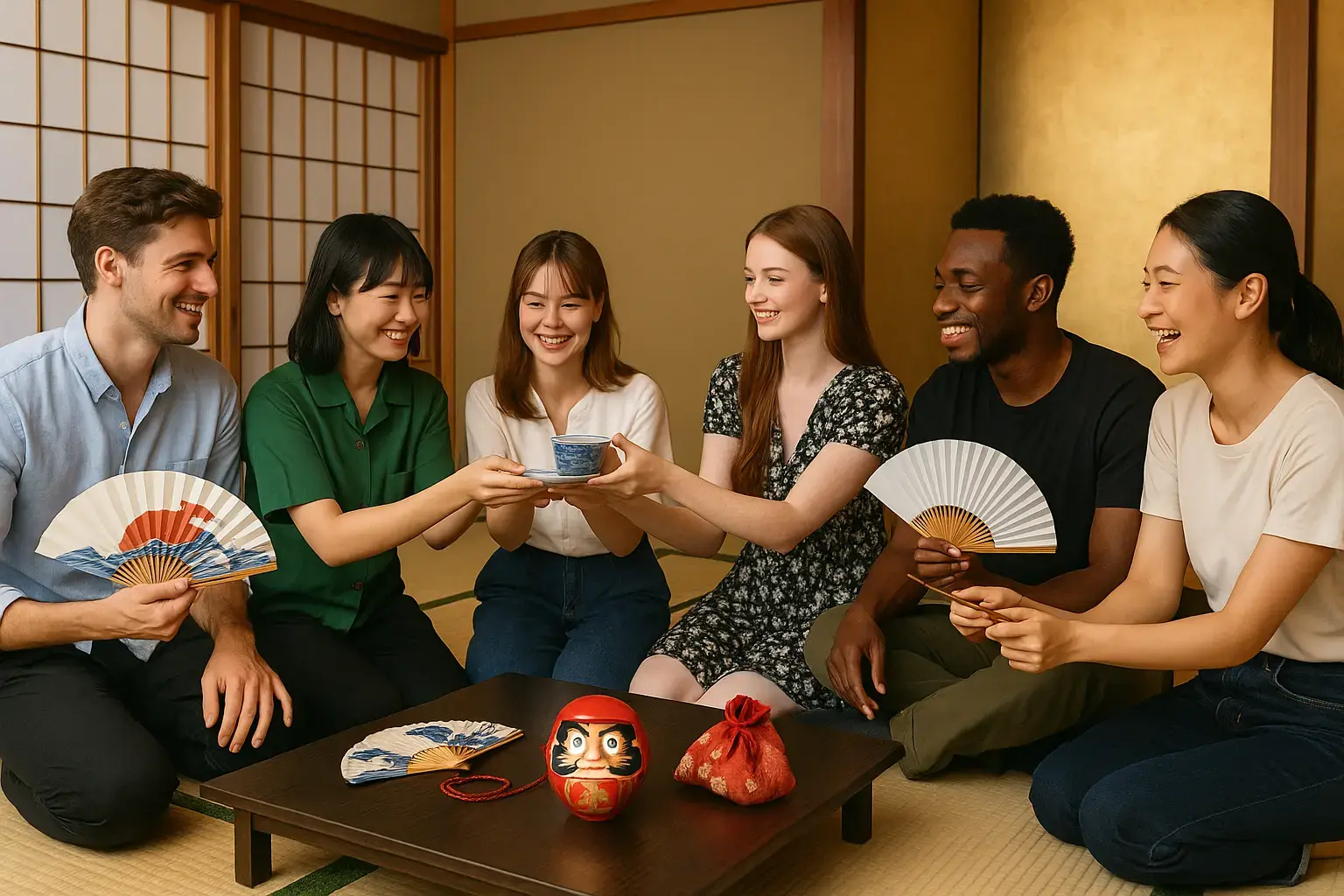
語POINT 02
In your language, from the first tap
Find, book and pay in English — the app works in 9 languages — so you don't need to read Japanese to get in. Once you're there, sharing the same moment does the rest.
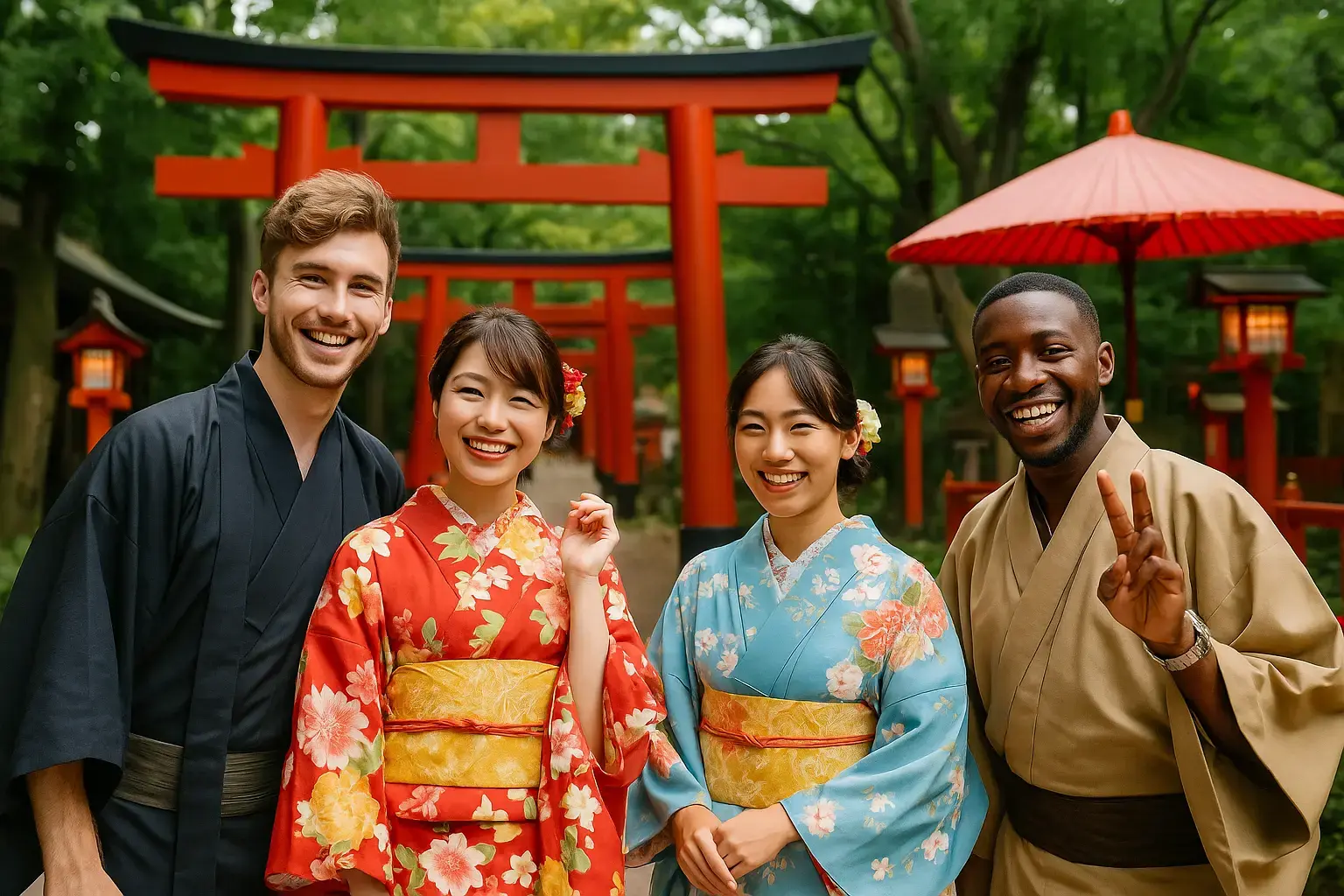
祭POINT 03
The Japan the world is talking about — first-hand
Festivals, shrines and temples, Japanese food, hot springs: the culture the world is most curious about right now. Experience it for yourself, the way the people here do.

夜POINT 04
Japan after dark, at music nights you can check first
Japan's nights are one of the things travellers look forward to most. On Matsuri you can also join music nights with people from around the world. The venue, time, price and organiser are all in the app before you go — so even if it's your first night out in Japan, or you're on your own, you can walk in with confidence.
Sumo, tea ceremony, Zen, calligraphy — and music nights.
We're adding new kinds of experience, a few at a time.
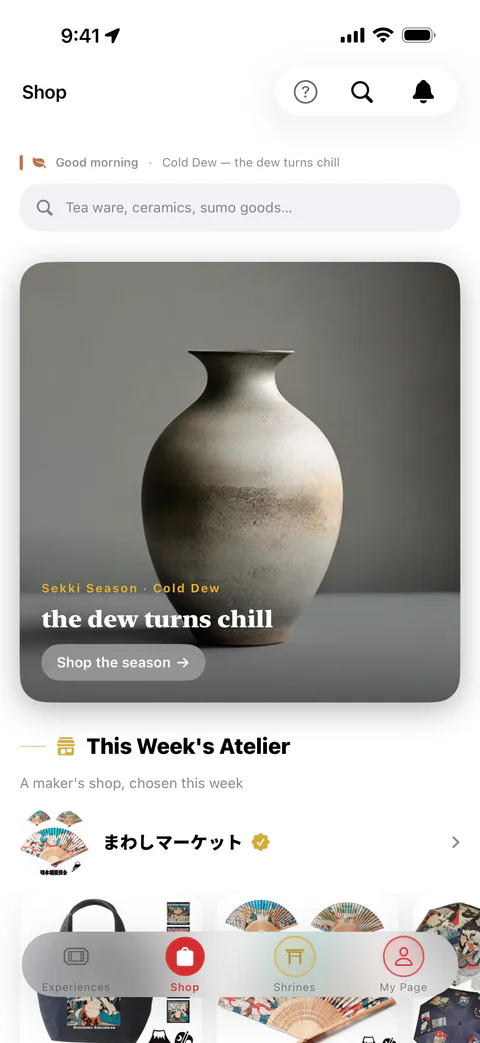
品SHOP
Keep Japanese culture close after the trip.
The in-app shop has seasonal features and a page for each workshop, so you can choose pieces from Japanese makers. Sales go to the makers and shops behind them.
Sumo goods approved by the Japan Sumo Association
We carry sumo goods approved by the Japan Sumo Association, and ship overseas.
Tea ceremony utensils and goods
Bring the bowls and tools you met at a tea ceremony into your own home.
If something happens, far from home0:56
A summer festival in an unfamiliar town — and what to open when something happens.
Footage for illustration only (includes AI-generated video).
安PEACE OF MIND
For travel worries — and for when something goes wrong.
Emergency Mode in the app
Distance and directions to the nearest shelter, what to do in an earthquake, tsunami, flood and more, information from the Japan Meteorological Agency, a board that works with nearby phones even without the internet, and an SOS signal using your torch and screen. The web Emergency Mode also opens without a signal once you've visited it.
For people who live in Japan, too
Emergency Mode isn't only for travellers. Nearby evacuation sites, 110 and 119, what to do first — and how to leave a message for family on the disaster message dial (171). Knowing how to act without hesitating can help protect you and the people you love.
路MANY WAYS IN
People find Matsuri through many doors.
Food, anime, events, traditional culture. We run our own media for each interest, and connect the people they bring to Japan with experiences on Matsuri.
- J-Timesj-times.orgJapanese culture, nature and business, for the world
- MICHI 道michi-japan.groupBook authentic Japanese culture: tea ceremony, kimono, zazen and more
- Japan Eventjapan-event.infoJapan's events and festivals in one place
- VEGAN JAPANveganjapan.topVegan and plant-based Japan, checked by our editors
- OTAKU COMPASSotakucompass.worldA compass to the Japan of anime and manga
注MOMENTUM
Attention is growing outside Japan, too.
The person building Matsuri shows up in person — at festivals, and wherever people from overseas gather. Every photo here was taken on the day.
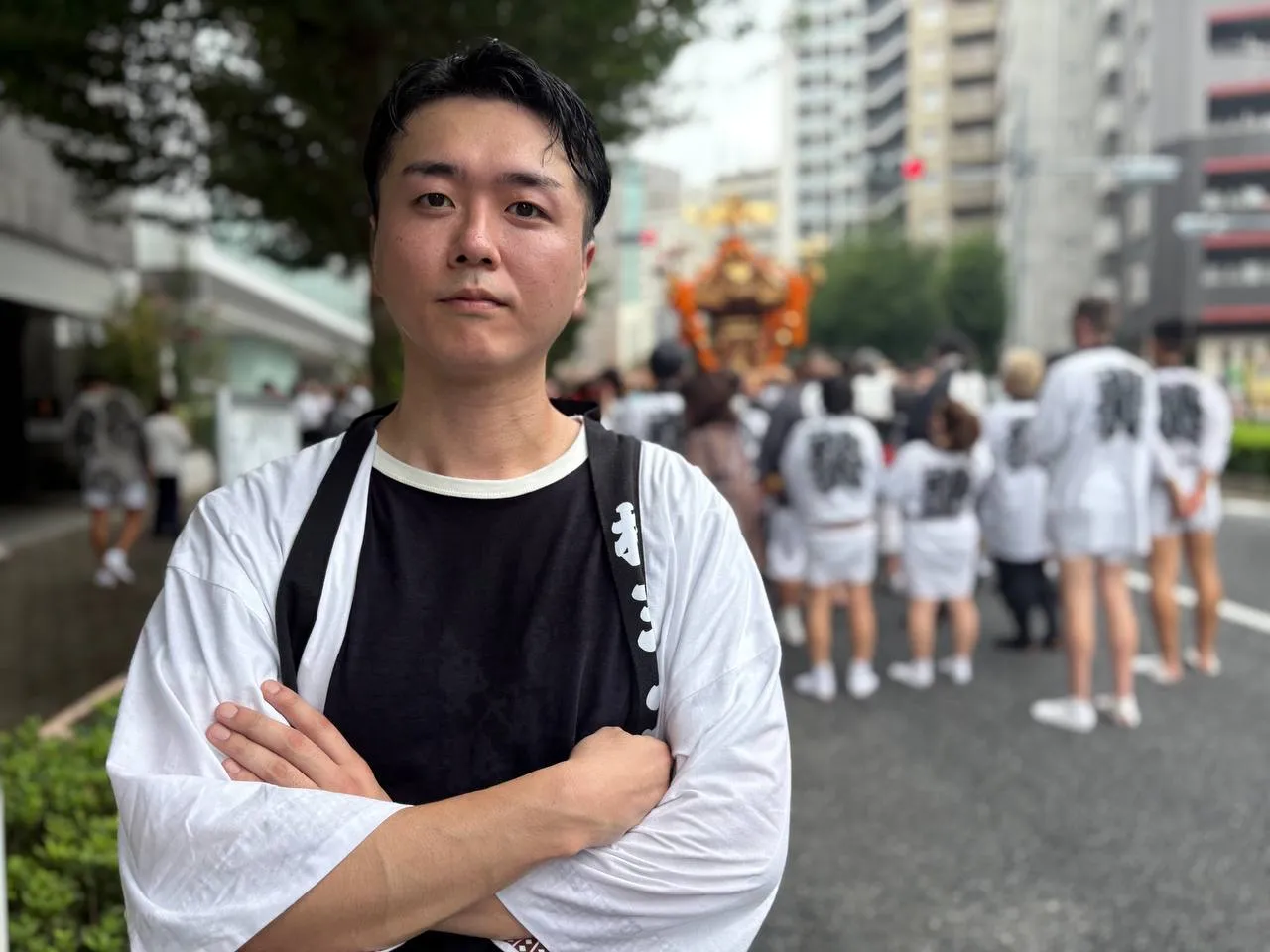
FOUNDER ─ WHO'S BUILDING IT
Ko Takahashi高橋 高
CEO, Jon&Coo Inc. / Founder of Matsuri
Working in several languages, writing code, training overseas — the further Ko went, the clearer the value of Japan's culture became. So did the fact that the people carrying it are dwindling. That's why, on festival days, Ko puts on a happi coat and joins in, aiming to be a bridge between the people who keep Japan's culture going and the rest of the world. Matsuri is built to protect that culture and pass it on.
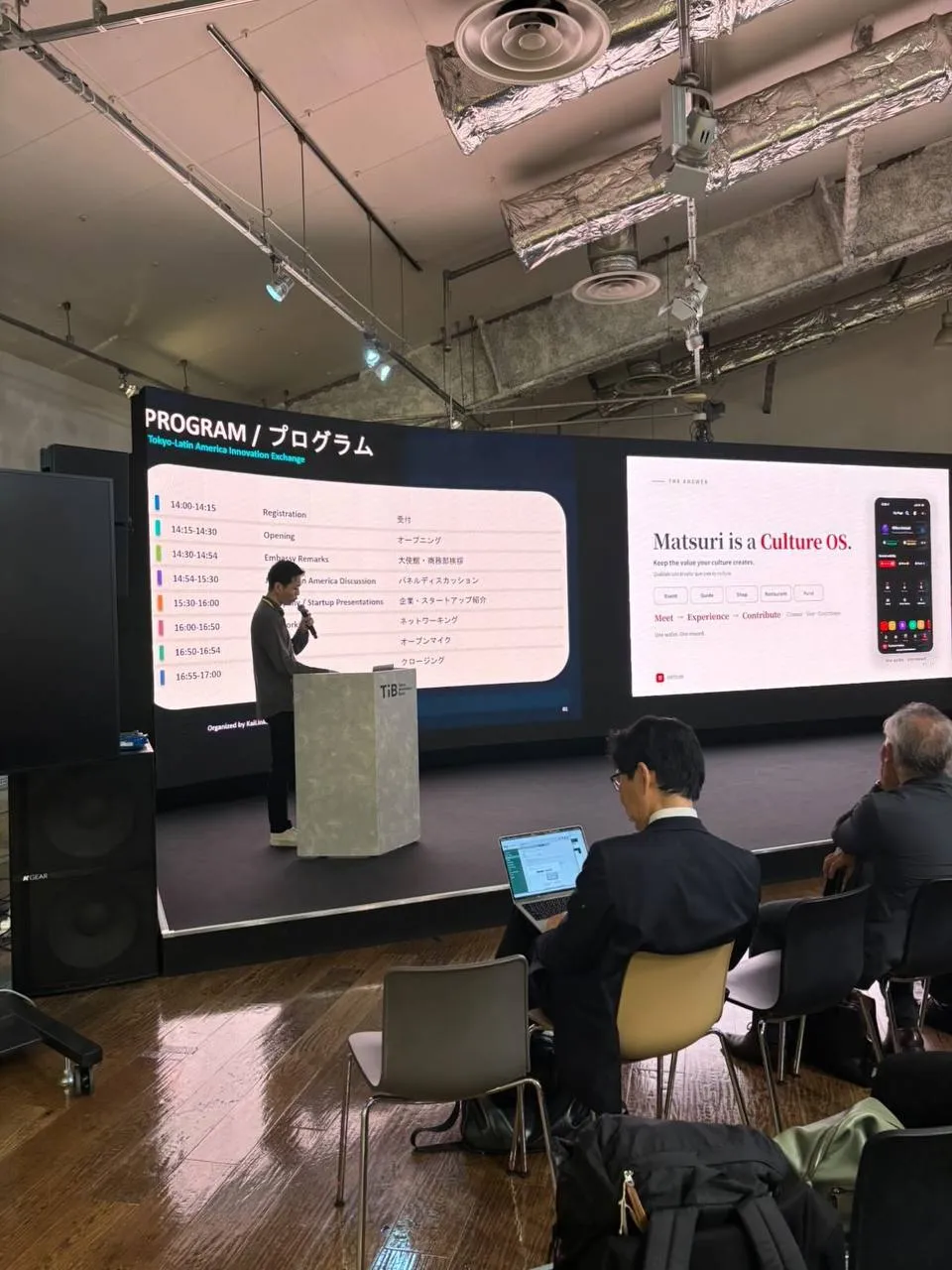
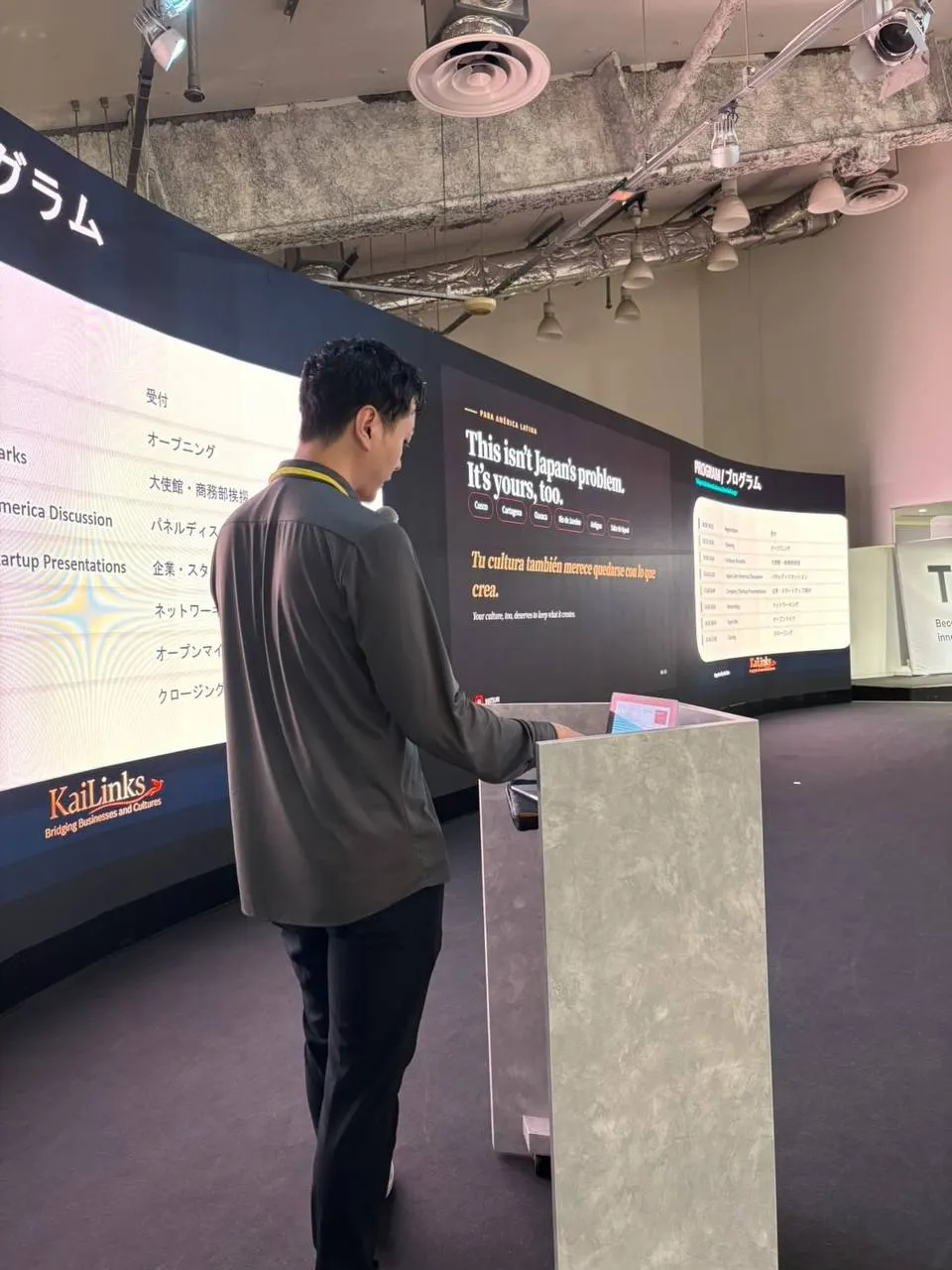
29 Jun 2026 ─ Tokyo Innovation Base, Marunouchi, Tokyo
Introducing Matsuri at a Latin America exchange
Invited by a university professor to speak at the Tokyo–Latin America Innovation Exchange. To embassy and trade officials from Mexico, Colombia, Guatemala and elsewhere, and to international students, the message was “This isn't Japan's problem. It's yours, too.” — and how Matsuri keeps the value a culture creates in the hands of the people who carry it.


13 Jul 2026 ─ WebX 2026, Shiba Park, Tokyo
Invited to the Web3 conference WebX 2026
Following the June talk, Matsuri was invited to the Web3 conference WebX 2026 on a business pass. Conversations that started at the venue and its side events are still going.
Games built with blockchain
In-app games like the omikuji walk let you keep commemorative badges recorded with blockchain technology — another way into Japanese culture for people around the world who already enjoy Web3.
A security audit is under way
So you can trust us with payments and personal data, we're carrying out a security audit.
COMING NEXTLive streams of festivals and experiences, and crowdfunding to support Japanese culture, will go live step by step.
SOURCES
- Japan National Tourism Organization (JNTO), visitor arrivals 2025, estimate — as reported by Kanko Keizai Shimbun, Feb 2026 (in Japanese)
- Japan Tourism Agency, Consumption Trend Survey for Foreigners Visiting Japan, 2025 calendar year, preliminary (in Japanese)
- Ministry of Economy, Trade and Industry, Traditional Crafts Office — briefing material, July 2022 (Council for Cultural Affairs, document 6) (in Japanese)
- Kyodo News survey, 2016 — as cited by Omatsuri Japan, “How can festivals be saved?”
- Japan Tourism Agency, Overnight Travel Statistics Survey, full year 2024 — as reported by Travel Voice, Mar 2025 (in Japanese)
- tripla, “Overseas OTAs explained: commission rates of the five major sites” (in Japanese)
- GetYourGuide Supply, “What commission fee does GetYourGuide charge supply partners?”
Figures checked on 30 September 2026.
Next weekend, join in with someone from across the world.
Your taking part helps carry Japanese culture to the next generation. Start by seeing what's on.
Scan with your iPhone camera to open the App Store